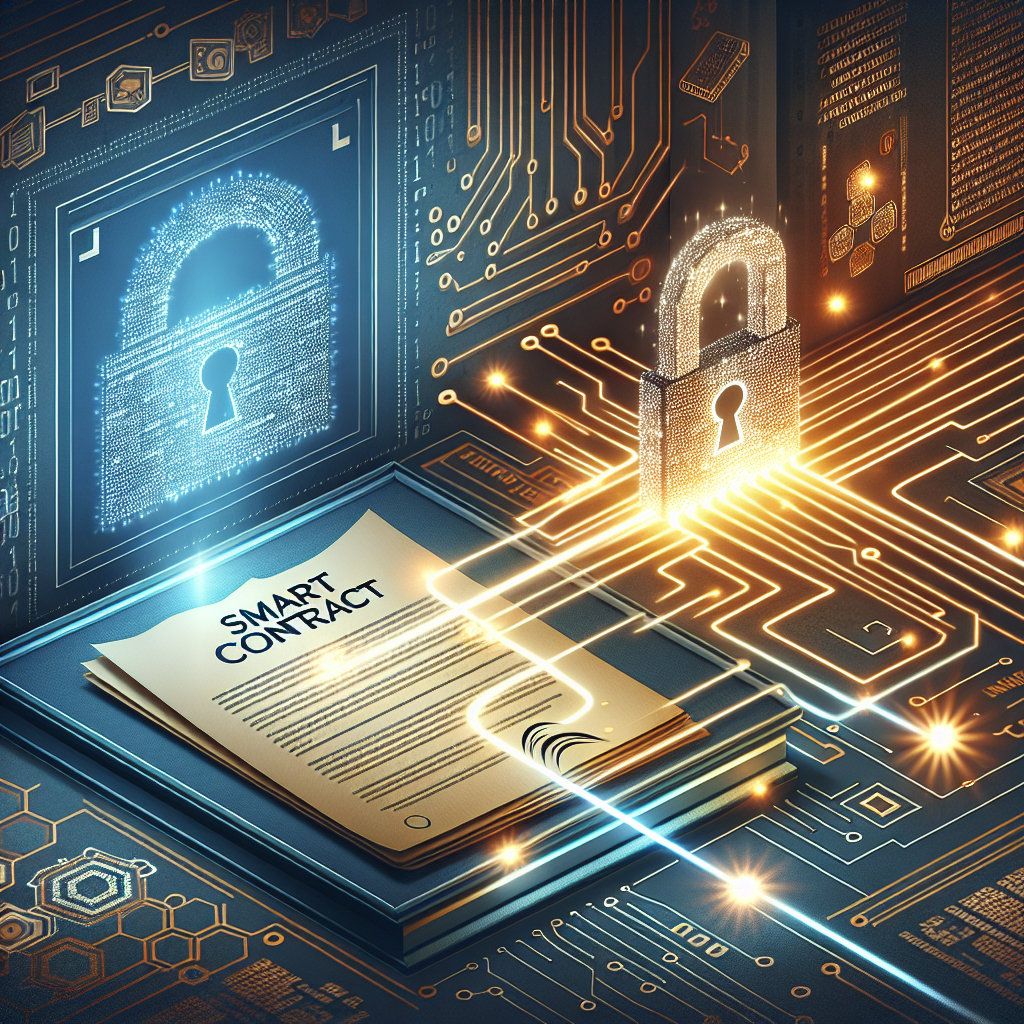
Smart Contracts: Revolutionizing Business Transactions and Slashing Costs
Smart Contracts: Revolutionizing Business Transactions and Slashing Costs
Introduction
Smart contracts have emerged as a game-changing technology in recent years, revolutionizing the way business transactions are conducted and slashing costs for businesses across various industries. In this article, we will delve into the concept of smart contracts, how they work, their benefits, and how they are transforming the business landscape.
What are Smart Contracts?
Smart contracts are self-executing contracts with the terms of the agreement between buyer and seller directly written into lines of code. These contracts automatically execute and enforce the terms of the agreement without the need for intermediaries. This eliminates the need for third parties such as lawyers, banks, or notaries to oversee the transaction, making it more efficient, transparent, and cost-effective.
How do Smart Contracts Work?
Smart contracts are built on blockchain technology, which is essentially a decentralized digital ledger that records transactions across multiple computers in a secure and transparent manner. When a smart contract is created, the terms of the agreement are encoded into a blockchain network, and once the conditions of the contract are met, the contract is automatically executed.
Benefits of Smart Contracts
1. Increased Efficiency: Smart contracts automate the process of executing and enforcing contracts, reducing the need for manual intervention and streamlining transactions.
2. Cost Savings: By eliminating intermediaries such as lawyers, banks, or notaries, smart contracts can significantly reduce transaction costs for businesses.
3. Transparency and Security: Smart contracts are executed on a blockchain network, which provides an immutable record of all transactions, ensuring transparency and security.
4. Elimination of Fraud: Since smart contracts are tamper-proof and self-executing, the risk of fraud is greatly reduced, providing a secure way to conduct business transactions.
5. Faster Settlements: Smart contracts can execute transactions in real-time, eliminating the delays associated with traditional contract settlements.
How Smart Contracts are Revolutionizing Business Transactions
1. Supply Chain Management: Smart contracts are transforming supply chain management by enabling the automation of transactions between suppliers, manufacturers, and distributors. This streamlines the flow of goods and services, reduces costs, and improves transparency in the supply chain.
2. Real Estate Transactions: Smart contracts are revolutionizing real estate transactions by automating the process of buying, selling, and renting properties. This eliminates the need for intermediaries such as real estate agents and lawyers, making transactions faster, cheaper, and more secure.
3. Insurance Claims: Smart contracts are simplifying the process of filing and verifying insurance claims by automating the payment process based on predefined conditions. This reduces the administrative costs associated with processing claims and ensures faster settlements for policyholders.
4. Financial Services: Smart contracts are disrupting the financial services industry by automating transactions such as loans, payments, and asset transfers. This reduces the need for manual processing, minimizes errors, and improves the speed and efficiency of financial transactions.
5. Legal Agreements: Smart contracts are revolutionizing the legal industry by automating the execution of legal agreements such as wills, trusts, and intellectual property rights. This provides a secure and transparent way to enforce legal agreements without the need for intermediaries.
Conclusion
Smart contracts are revolutionizing the way business transactions are conducted by automating the process of executing and enforcing contracts in a secure and transparent manner. By eliminating intermediaries, reducing costs, and improving efficiency, smart contracts are transforming industries across the globe and paving the way for a more efficient and secure business environment. Businesses that embrace this technology stand to benefit from increased efficiency, cost savings, and improved transparency in their transactions.